
If you’ve recently come across “FSS” in a message and paused for a second, you’re not alone. It’s one of those short, cryptic abbreviations that can feel confusing depending on where and how it’s used.
People search for “what is FSS mean in text” because it doesn’t have just one fixed meaning. Its tone changes based on context, the relationship between people, and even the platform where it appears.
In some conversations, it feels playful. In others, it can sound serious or even slightly aggressive. That’s exactly why understanding it matters. A small misunderstanding can shift the tone of an entire conversation.
Let’s break it down clearly so you can recognize it, use it naturally, and respond with confidence.
FSS – Quick Meaning
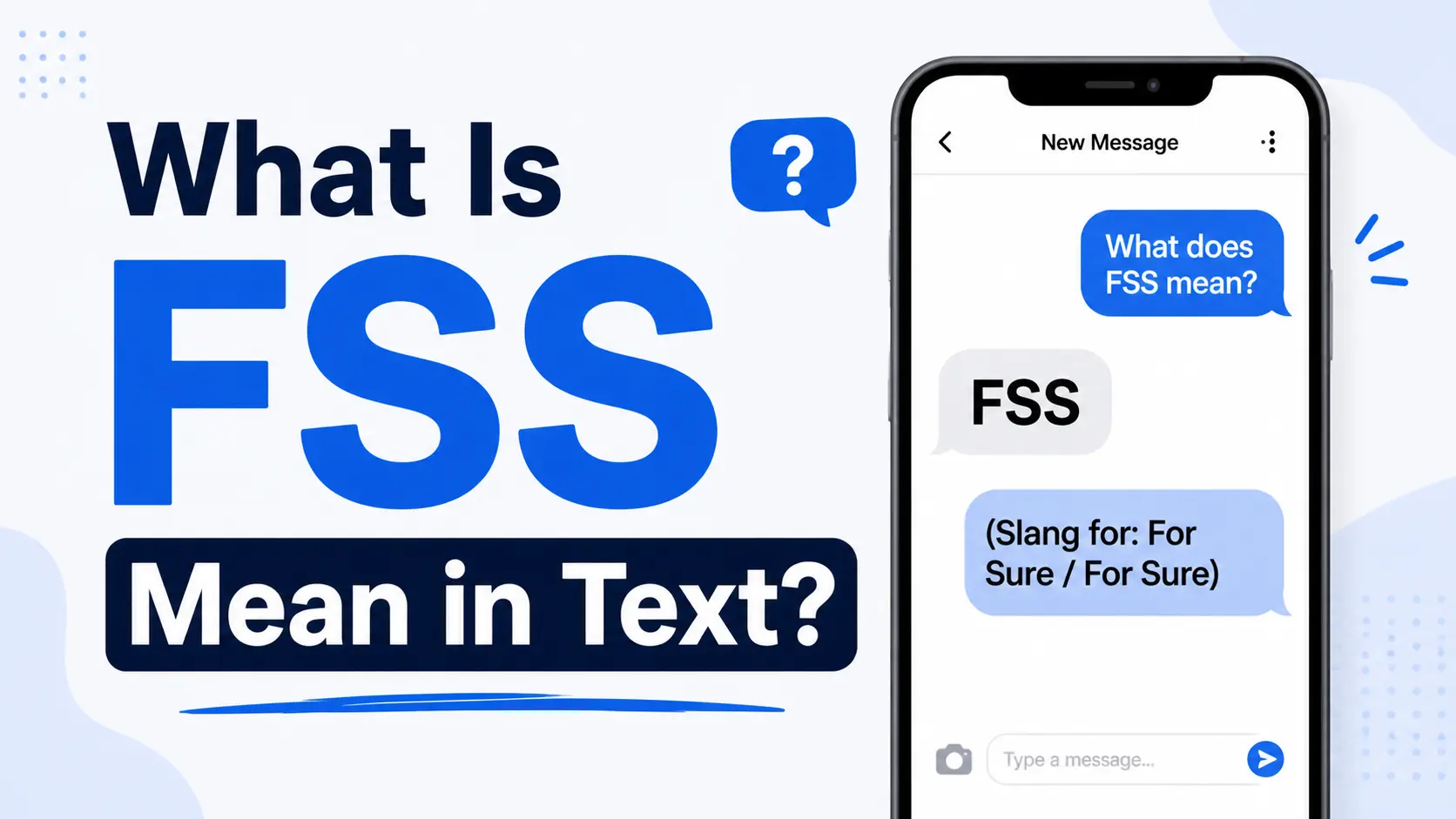
“FSS” most commonly stands for:
- For Sure, Sure
- Used to strongly agree or confirm something
- Can carry a tone of enthusiasm, sarcasm, or reassurance, depending on context
Simple Examples
- “I’ll be there at 8.”
“FSS, don’t be late.” - “You think we’ll win?”
“FSS, we got this.” - “Are you serious?”
“FSS 😅”
At its core, “FSS” is about certainty and emphasis.
Origin & Background
“FSS” comes from the natural evolution of digital communication. As texting and social media became faster, people started shortening common phrases to save time and add personality.
It likely evolved from “for sure,” which has been part of everyday English for decades. Adding an extra “S” intensifies the expression. It makes it feel stronger, more emotional, or more casual.
Social media platforms like TikTok, Instagram, and Snapchat helped push “FSS” into wider use. Short-form content and rapid conversations encouraged quick, expressive replies.
Over time, its meaning became flexible. In some cases, it’s genuine agreement. In others, it’s used ironically or even playfully sarcastic.
Real-Life Conversations
Here’s how “FSS” shows up in real conversations across platforms:
WhatsApp Chat
Person A: Are you coming to the wedding tomorrow?
Person B: FSS, I already bought my outfit 😄
Instagram DMs
Person A: You really liked that movie?
Person B: FSS, it was amazing
TikTok Comments
User 1: This song is the best thing this year
User 2: FSS 🔥
Text Message
Person A: You still mad at me?
Person B: FSS not, I was just tired
These examples show how tone shifts depending on context. It can feel warm, casual, or slightly defensive.
Emotional & Psychological Meaning
“FSS” is more than just a shortcut. It reflects how people express certainty and connection in modern communication.
Emotionally, it can signal:
- Confidence
- Reassurance
- Excitement
- Light sarcasm
People use it because it feels quick yet expressive. It adds personality without requiring a full sentence.
From a psychological perspective, short affirmations like “FSS” help maintain conversational flow. They reduce effort while still showing engagement.
A Real-Life Scenario
Imagine a friend asking if you still support them after a disagreement.
You reply: “FSS.”
That single response carries reassurance, loyalty, and emotional stability. It’s brief, but meaningful.
Usage in Different Contexts
Social Media
On platforms like Instagram or TikTok, “FSS” is used casually. It often appears in comments to show agreement or hype.
Example: “This outfit is fire” → “FSS 🔥”
Friends & Relationships
Among friends, it feels natural and relaxed. It can strengthen connection when used sincerely.
Example: “You’re my best friend” → “FSS always”
Work / Professional Settings
In professional communication, “FSS” is usually inappropriate. It can come across as too casual or unclear.
Better alternative: “Absolutely” or “Certainly”
Casual vs Serious Tone
- Casual: Friendly, supportive
- Serious: Can sound abrupt or overly blunt
Tone depends on your relationship with the person.
When NOT to Use It
There are moments where “FSS” doesn’t fit well:
- Formal emails or workplace chats
- Conversations with elders or authority figures
- Sensitive emotional discussions
- Situations requiring clarity and professionalism
Using it in the wrong context may make you seem careless or dismissive.
Common Misunderstandings
Many people misinterpret “FSS” because of its flexibility.
What People Get Wrong
- Assuming it always means strong agreement
- Missing sarcastic tone
- Thinking it’s rude when it’s not
Tone Confusion
“FSS” can sound supportive or sarcastic depending on delivery.
Example:
“FSS…” (with hesitation) might feel doubtful instead of confident.
Comparison Table
| Expression | Meaning | Tone | Usage |
|---|---|---|---|
| FSS | Strong agreement | Casual / expressive | Friends, social media |
| FS (For Sure) | Agreement | Neutral | General use |
| Bet | Agreement / acceptance | Trendy | Gen Z slang |
| Sure | Basic agreement | Neutral | Universal |
| No way | Disagreement | Emotional | Casual |
Key Insight
“FSS” stands out because it adds intensity and personality. It’s not just agreement. It’s agreement with feeling.
Variations / Types
Here are common variations you might see:
- FS – Short for “for sure”
- FSSS – Extra emphasis or excitement
- Fsss – Softer tone, sometimes playful
- FSS bro – Friendly, casual agreement
- FSS fr – Reinforces truth, “for real”
- FSS 😭 – Emotional or dramatic agreement
- FSS lol – Lighthearted tone
- FSS nah – Mixed tone, sometimes sarcastic
- FSS always – Strong loyalty or reassurance
- FSS 100% – Absolute certainty
Each variation shifts the emotional tone slightly.
How to Respond When Someone Uses It
Casual Replies
- “Alright, cool”
- “Got you”
- “Same here”
Funny Replies
- “You better mean that 😂”
- “Say less”
- “I’m holding you to that”
Mature Replies
- “I appreciate that”
- “That means a lot”
- “Glad we’re on the same page”
Respectful Replies
- “Thank you for confirming”
- “Understood”
- “I agree with you”
Your response should match the tone of the conversation.
Regional & Cultural Usage
Western Culture
In Western contexts, “FSS” is casual and expressive. It’s commonly used among younger audiences and online communities.
Asian Culture
In many Asian cultures, direct slang like “FSS” is less common in formal communication. It’s mostly used in informal chats among friends.
Middle Eastern Culture
Usage exists but is more limited. Cultural norms often favor respectful and clear language, especially in mixed-age conversations.
Global Internet Usage
Online, “FSS” crosses borders easily. It’s part of a shared digital language where brevity and emotion matter more than grammar.
Generational Differences
- Gen Z: Uses “FSS” frequently, often with emojis
- Millennials: Understand it but may prefer “FS” or full phrases
Is It Safe for Kids?
Yes, “FSS” is generally safe.
It doesn’t carry offensive meaning on its own. However, context still matters. Kids should understand when casual slang is appropriate and when it’s not.
FAQs
1. What does FSS stand for in texting?
It usually means “For Sure, Sure,” expressing strong agreement or confirmation.
2. Is FSS rude?
Not usually. It depends on tone and context. It can sound blunt if used in serious conversations.
3. Can FSS be sarcastic?
Yes. Like many slang terms, it can carry sarcasm depending on how it’s used.
4. Is FSS the same as FS?
FS means “for sure,” while FSS adds extra emphasis and emotion.
5. Should I use FSS in professional chats?
No. It’s better to use clear and formal language in professional settings.
6. Why do people use FSS instead of full words?
It’s faster, expressive, and fits the style of modern digital communication.
Conclusion
Understanding what “FSS” means in text is really about understanding how people communicate today.
It’s quick, emotional, and flexible. Sometimes it’s genuine agreement. Sometimes it’s playful or even slightly sarcastic. The meaning lives in the tone and context.
Once you recognize that, using it becomes natural. You stop overthinking and start reading the emotion behind the words.
So next time you see “FSS,” you won’t hesitate. You’ll understand exactly what’s being said and how to respond with confidence.