
When someone types “ISC” in a message, comment, or direct chat, it can create confusion because short forms often change meaning depending on the situation. Online conversations move quickly, and people use abbreviations to save time, express emotions, or create a shared digital language.
So, what does ISC mean in text?
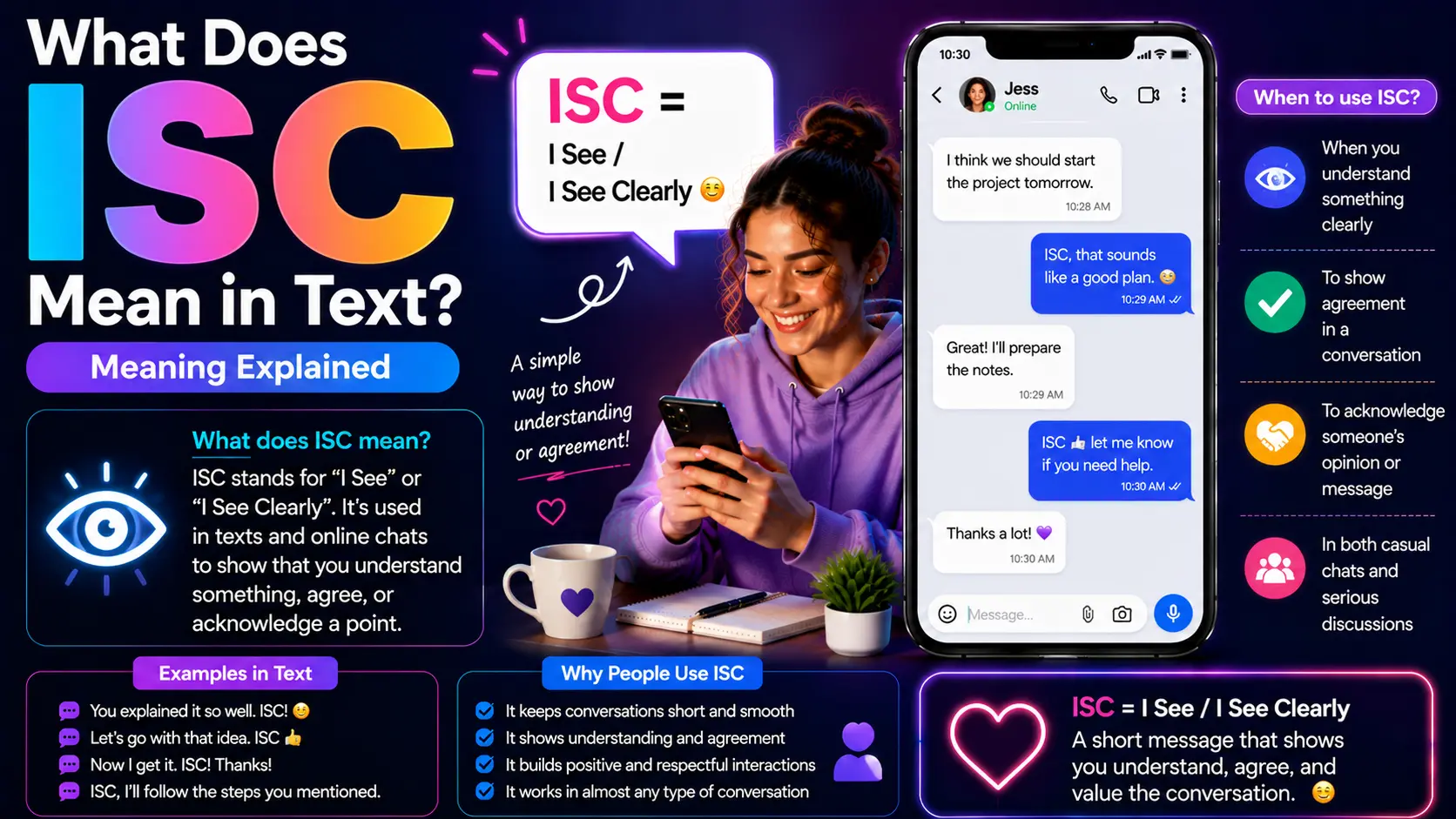
In most casual online conversations, ISC means “I See” or “I See, I Understand.” People often use it as a quick response when they understand something someone has explained. It shows acknowledgment without needing a long reply.
However, like many internet abbreviations, ISC can have different meanings depending on the community, platform, or conversation. Understanding the context helps you know whether someone is simply agreeing, showing awareness, or using a different definition.
People search for the meaning of ISC because they want to avoid misunderstanding the tone behind a message. A short reply like “ISC” may feel simple, but it can carry different emotions depending on the relationship between the people chatting.
ISC Meaning in Text: Quick Meaning
ISC usually means “I See” in text conversations.
It is used when someone wants to say:
- I understand.
- I get what you mean.
- I noticed that.
- That makes sense.
Examples:
“ISC, now I understand why you left early.”
“ISC, thanks for explaining.”
“ISC. I didn’t know that before.”
In casual conversations, ISC is often a polite acknowledgment rather than a strong emotional reaction.
Origin and Background of ISC
The rise of ISC comes from the broader internet culture of shortening everyday phrases. As texting became faster through platforms like instant messaging apps and social media, people started creating abbreviations to communicate quickly.
Similar expressions such as “LOL,” “BRB,” “IDK,” and “BTW” became common because users wanted faster ways to express thoughts.
ISC developed as a conversational shortcut. Instead of typing “I see what you mean,” someone could simply write “ISC.”
Social media also influenced how people use abbreviations. On platforms where comments and messages are often brief, shorter expressions feel natural. Younger users especially tend to create and adopt quick forms of communication.
Over time, ISC became less about saving characters and more about showing a reaction. It represents a small moment of understanding between two people.
Real-Life Conversations Using ISC
WhatsApp Conversation
Person A:
“I couldn’t reply yesterday because my phone was damaged.”
Person B:
“ISC, I thought you were ignoring me.”
Person A:
“No, everything is okay now.”
Here ISC shows understanding and removes tension.
Instagram DM Conversation
Person A:
“I posted that photo because it reminded me of my old memories.”
Person B:
“ISC, that’s actually a nice reason.”
Person A:
“Yeah, it means a lot to me.”
Here ISC shows emotional understanding.
TikTok Comments
Person A:
“People think this trend is easy, but it took me weeks to learn.”
Person B:
“ISC, practice really makes a difference.”
The meaning is closer to “I understand your point.”
Text Message Conversation
Person A:
“I won’t join tonight because I have an important family event.”
Person B:
“ISC, no worries. We can meet another day.”
ISC works as a respectful acknowledgment.
Emotional and Psychological Meaning of ISC
Although ISC is only three letters, it reflects something important in modern communication: the need to feel heard.
When someone uses ISC, they are usually showing that they have received the information and processed it. It can create a feeling of connection because the person is not ignoring the message.
In many cases, people use ISC because they want to avoid writing a long response while still showing respect.
For example, a friend might explain a personal situation. Replying with ISC can mean, “I understand what you are saying, and I am listening.”
A simple personal example is when someone shares a difficult experience and you do not know the perfect words to say. A response like “ISC” can be a small way of showing that you are present in the conversation.
ISC Usage in Different Contexts
Social Media
On social media, ISC is usually casual. People may use it in comments or private messages when reacting to someone’s opinion, story, or explanation.
Example:
“ISC, that perspective makes sense.”
Friends and Relationships
Among friends, ISC can show support and understanding.
It may communicate:
“I understand your situation.”
“I understand your feelings.”
“I understand why you did that.”
Work and Professional Settings
ISC is generally not recommended in professional communication because many workplaces prefer clear language.
Instead of:
“ISC.”
A professional response would be:
“I understand.”
“Thank you for explaining.”
“That makes sense.”
Casual vs Serious Tone
ISC is mostly casual. The meaning depends heavily on the relationship.
Between friends, it may feel warm.
Between strangers, it may sound brief or distant.
When Not to Use ISC
ISC is not suitable for every situation.
Avoid using it when:
- Writing formal emails.
- Communicating with someone unfamiliar with texting slang.
- Discussing serious topics where a detailed response is needed.
- Responding to emotional situations that require empathy.
For example, if someone shares a personal problem, only saying “ISC” might feel too short. Adding more words can show genuine care.
Common Misunderstandings About ISC
Many people misunderstand ISC because abbreviations do not carry the same emotional tone as full sentences.
A person may think ISC sounds cold, while another person sees it as simple acknowledgment.
Another common mistake is assuming ISC always means agreement. Actually, “I see” does not always mean “I agree.”
Example:
“I see your opinion, but I have a different view.”
Here, the person understands but does not support the idea.
Context is everything in digital communication.
ISC Compared With Similar Expressions
| Expression | Meaning | Tone |
|---|---|---|
| ISC | I See / I Understand | Casual acknowledgment |
| IKR | I Know, Right? | Agreement |
| IDK | I Don’t Know | Uncertainty |
| Got it | Understanding | Clear and direct |
| Makes sense | Agreement or understanding | Positive |
| I disagree | Opposite meaning | Different opinion |
Key Insight:
ISC mainly shows awareness and understanding. It does not automatically mean approval, agreement, or excitement.
Variations and Types of ISC Meaning
1. ISC as “I See”
The most common meaning. Used when someone understands information.
2. ISC as “I See, I Understand”
A stronger version showing complete understanding.
3. ISC as a Neutral Reply
Used when someone wants to acknowledge a message without continuing the conversation.
4. ISC as Emotional Support
Sometimes used when listening to someone’s feelings.
5. ISC as a Conversation Bridge
Can show that someone is ready for the next part of the discussion.
6. ISC as Agreement Indicator
In some situations, people use it when they accept an explanation.
7. ISC as a Short Reaction
Common in fast texting where people prefer quick replies.
8. ISC in Online Communities
Some groups may use ISC differently based on their shared language.
9. ISC as a Polite Response
It can replace longer phrases like “I understand what you mean.”
10. ISC as a Casual Internet Shortcut
A simple example of how online language continues to evolve.
How to Respond When Someone Uses ISC
Casual Replies
“Yeah, exactly.”
“Right?”
“Glad you understand.”
Funny Replies
“Finally, the mystery is solved.”
“Achievement unlocked: understanding reached.”
“Welcome to the explanation club.”
Mature Replies
“Thanks for understanding.”
“I appreciate you listening.”
“Exactly, that was my point.”
Respectful Replies
“I’m glad I could explain.”
“Thanks for taking the time to understand.”
“I appreciate your response.”
Regional and Cultural Usage of ISC
Western Culture
In many Western online spaces, ISC is seen as a simple acknowledgment. People often prefer short digital replies because conversations move quickly.
Asian Culture
In many Asian online communities, shorter replies are common because messaging often focuses on efficiency and politeness.
ISC may be understood as a respectful way of saying someone understands.
Middle Eastern Culture
Communication styles may vary, but many online users understand ISC through global internet culture. However, some people may prefer fuller expressions, especially in serious conversations.
Global Internet Usage
Because English dominates much of online communication, abbreviations like ISC travel across countries and generations.
People often learn them through social media rather than traditional language education.
Gen Z vs Millennials
Gen Z users often prefer quick and creative expressions. Millennials may recognize ISC but sometimes use more traditional phrases like “got it” or “I understand.”
Both generations adjust depending on the platform and audience.
Is ISC Safe for Kids?
ISC itself is generally harmless because it usually means “I see” or “I understand.”
However, children should understand that online abbreviations can have different meanings in different communities.
Teaching kids to consider context, tone, and the person they are communicating with is more important than memorizing every abbreviation.
FAQs About ISC Meaning in Text
What does ISC stand for in texting?
ISC usually stands for “I See” or “I See, I Understand” in casual conversations.
Is ISC the same as I understand?
Yes, in many situations ISC carries a similar meaning, showing that someone understands.
Does ISC mean agreement?
Not always. It means understanding, but the person may or may not agree.
Is ISC formal language?
No. ISC is mainly used in casual texting and online conversations.
Can ISC sound rude?
Sometimes. A very short reply can feel distant depending on the situation and relationship.
Where is ISC commonly used?
It is mostly found in chats, social media messages, and casual online conversations.
Should I use ISC at work?
Usually no. Professional communication is clearer with complete phrases.
Conclusion
ISC is a small abbreviation with a simple meaning: “I See” or “I Understand.” It represents how modern communication has become faster, shorter, and more digital.
While three letters may seem insignificant, they can still express attention and acknowledgment in a conversation.
The best way to understand ISC is to look beyond the letters and consider the situation, relationship, and emotional tone behind the message.
Language keeps changing, and knowing these small expressions helps people communicate more confidently in today’s online world.