
If you spend time on social media, gaming chats, or text messages, you’ve probably seen someone type “woot!” after exciting news. Maybe a friend passed an exam and replied with “Woot!” Or someone celebrated getting concert tickets with a quick “woot woot!”
At first glance, the word looks strange. Is it a typo? A sound effect? A secret internet code?
That confusion is exactly why so many people search for the meaning of “woot” in text conversations. The word has been around online for years, yet many people still aren’t completely sure how to use it naturally.
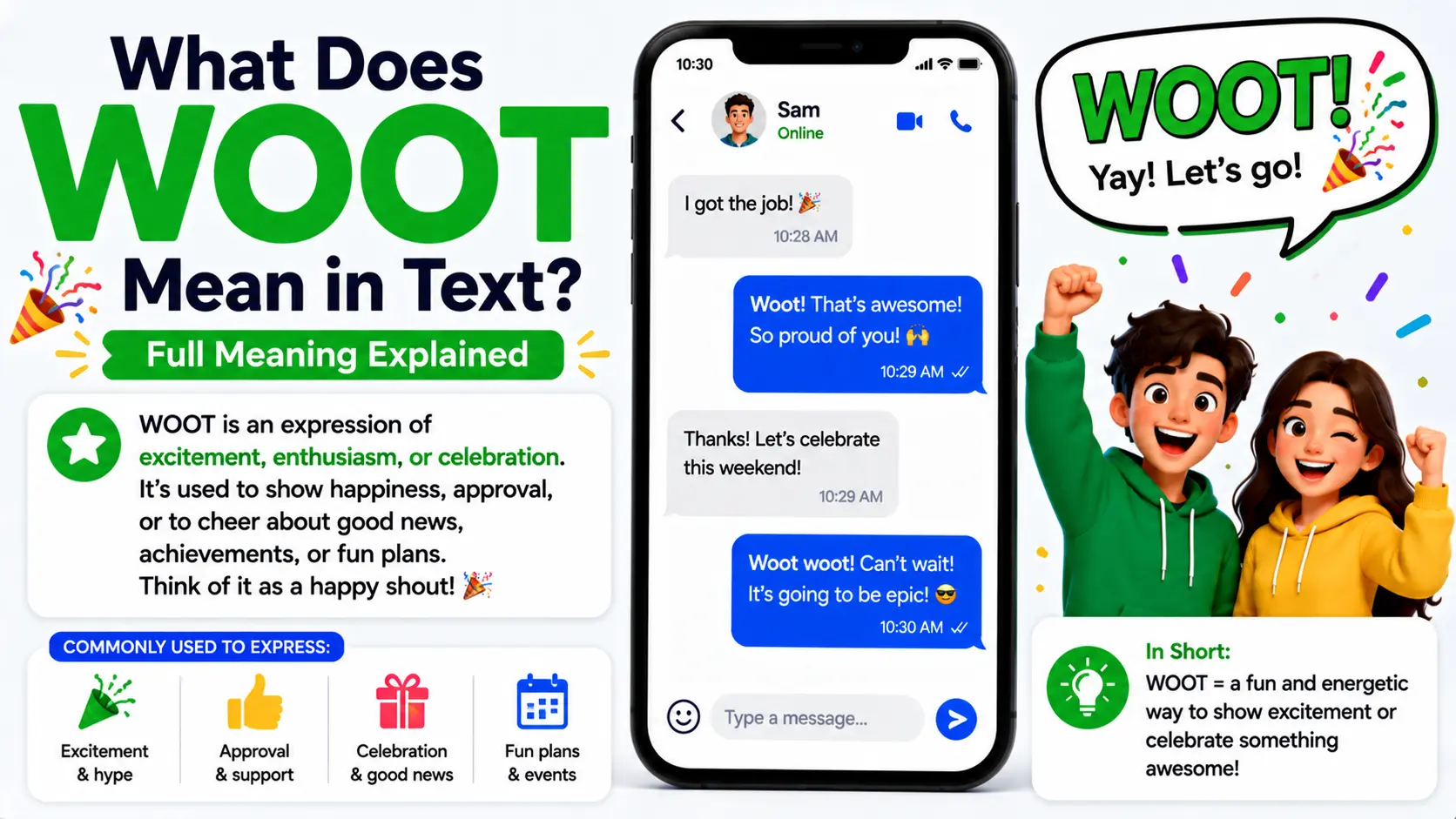
In simple terms, “woot” is an expression of excitement, happiness, celebration, or victory. It’s a playful way to show enthusiasm in digital conversations.
But there’s more depth to it than just “yay.”
The way people use “woot” reveals a lot about internet culture, emotional expression online, and how casual communication keeps evolving across generations.
Woot Meaning in Text – Quick Definition
“Woot” is an internet slang expression used to celebrate something exciting, successful, funny, or positive.
People usually type it when they feel:
- Excited
- Proud
- Victorious
- Happy
- Energetic
It works similarly to saying:
- “Yay!”
- “Awesome!”
- “Let’s go!”
- “Finally!”
- “Woohoo!”
Simple Examples
“I finally got the job offer. Woot!”
“Woot! We won the game!”
“Finished my exams today. Woot woot!”
The phrase is casual, playful, and emotional. It’s mostly used online or in relaxed conversations.
Origin & Background of “Woot”
The word “woot” became popular during the early internet and gaming era of the late 1990s and early 2000s.
Many people believe it evolved from celebratory sounds like:
- “Woo!”
- “Woohoo!”
- “Whoot!”
Over time, internet users shortened and stylized those expressions into “woot.”
Online gamers especially helped spread the term. In multiplayer games, players typed “woot!” after winning battles, leveling up, or achieving something difficult.
Eventually, the word moved beyond gaming and entered:
- Chat rooms
- Forums
- AOL Messenger conversations
- Social media platforms
- Meme culture
As texting became more emotional and expressive, “woot” stayed relevant because it feels energetic without sounding too serious.
Social Media Influence
Platforms like TikTok, Discord, Reddit, and Instagram helped revive older internet slang. While Gen Z often creates newer expressions, many millennials still use “woot” nostalgically.
Today, the word carries both excitement and a slightly playful retro internet vibe.
Real-Life Conversations Using “Woot”
WhatsApp Conversation
Person A: I passed my driving test today!
Person B: Woot!! I knew you would 😭🔥
Instagram DM
Person A: Guess who finally got BTS tickets?
Person B: WOOT WOOT 😭 you’re so lucky
TikTok Comments
Person A: I hit 100k followers today
Person B: Woot! Hard work finally paid off 👏
Text Message
Person A: Mom said yes to the trip
Person B: Woot 😂 start packing now
These examples feel natural because “woot” adds emotional energy without sounding overly dramatic.
Emotional & Psychological Meaning of “Woot”
At its core, “woot” is about shared excitement.
Digital communication often lacks facial expressions and tone of voice. Words like “woot” help fill that emotional gap.
Instead of typing a long emotional response, people use quick expressions to communicate excitement instantly.
Why People Use It
People use “woot” because it feels:
- Lighthearted
- Friendly
- Supportive
- Energetic
- Socially warm
It creates emotional connection in a very short form.
What It Reveals About Modern Communication
Modern texting culture values speed, emotion, and personality.
A simple “Congratulations” can feel formal. But “Woot!!” feels alive and personal.
That difference matters emotionally.
A Real-Life Style Scenario
Imagine you’ve been applying for jobs for months. You finally text your closest friend:
“I got hired today.”
Instead of replying with a plain “nice,” they text:
“WOOT!!! Finally 😭🔥”
That response feels emotionally invested. It shows excitement, support, and shared happiness all at once.
That’s why internet slang survives. It helps people feel emotionally present even through screens.
Using “Woot” in Different Contexts
Social Media
“Woot” is common in captions, comments, and reaction posts.
Examples:
- “Woot! Vacation starts tomorrow 🌴”
- “First workout completed. Woot.”
It works best in upbeat or celebratory content.
Friends & Relationships
Friends often use “woot” jokingly or enthusiastically.
It creates a relaxed and supportive tone.
Examples:
- “Woot, date night tonight?”
- “You finally replied. Woot 😂”
Work or Professional Settings
Use caution here.
“Woot” can sound immature in formal business communication.
Avoid using it in:
- Job applications
- Client emails
- Formal reports
However, casual team chats may allow it.
Example:
“Project finished ahead of schedule. Woot!”
That may work in a relaxed workplace culture.
Casual vs Serious Tone
“Woot” fits casual conversations far better than serious discussions.
It sounds playful, not emotional in a deep or sensitive way.
When NOT to Use “Woot”
Even fun slang has limits.
Avoid It During Serious Situations
Do not use “woot” when discussing:
- Illness
- Loss
- Emotional conflict
- Sensitive news
It may appear emotionally disconnected.
Be Careful in Formal Communication
Using “woot” in professional interviews or official emails can hurt credibility.
Watch for Tone Misunderstandings
Some people see “woot” as childish or outdated.
Older generations unfamiliar with internet slang may misunderstand it completely.
Common Misunderstandings About “Woot”
People Think It’s a Typo
Many assume “woot” was meant to be:
- “What”
- “Woo”
- “Whoot”
But it’s actually intentional slang.
Some Think It’s Sarcastic
Tone matters online.
Depending on context, “woot” can sometimes sound sarcastic.
Example:
“Another Monday morning. Woot.”
Here, the speaker probably isn’t genuinely excited.
Literal vs Figurative Meaning
“Woot” isn’t a literal word with a dictionary-style definition. It’s more of an emotional reaction.
That’s why context changes its tone.
Comparison Table
| Expression | Meaning | Tone |
|---|---|---|
| Woot | Excitement or celebration | Playful |
| Woohoo | Strong excitement | Loud and energetic |
| Yay | Happiness or approval | Friendly |
| Let’s go | Motivation or hype | Confident |
| Meh | Boredom or indifference | Negative |
| OMG | Shock or surprise | Emotional |
| Cool | Approval | Relaxed |
| Finally | Relief after waiting | Emotional |
Key Insight
“Woot” sits somewhere between excitement and internet nostalgia. It’s more playful than “yay” and less intense than “woohoo,” which makes it useful for casual online celebrations.
Variations and Types of “Woot”
1. Woot Woot
Extra excitement or celebration.
Example: “Woot woot! Weekend time.”
2. Wooooot
Extended spelling for dramatic excitement.
3. Woot!
Basic celebratory version with enthusiasm.
4. WOOT
All caps version showing stronger energy.
5. Mega Woot
A humorous exaggerated celebration.
6. Tiny Woot
Used jokingly for small achievements.
7. Wootie
Cute or affectionate variation among friends.
8. Woot Squad
Refers to a group celebrating together.
9. Woot Mode Activated
Gaming-style humorous phrase for excitement.
10. Woot Moment
Describes a memorable happy event.
How to Respond When Someone Says “Woot”
Casual Replies
- “You earned it!”
- “Niceee 😂”
- “Love that for you!”
Funny Replies
- “Calm down celebrity 😭”
- “The excitement level is illegal”
- “Someone’s hyper today”
Mature Replies
- “That’s genuinely great news.”
- “I’m happy things worked out.”
Respectful Replies
- “Congratulations.”
- “You should feel proud.”
Matching the other person’s emotional energy makes conversations feel more natural.
Regional & Cultural Usage of “Woot”
Western Culture
In North America and Europe, “woot” is strongly tied to internet culture and gaming communities.
Millennials especially recognize it instantly.
Asian Culture
In many Asian countries, younger users understand “woot” through global internet exposure, though local slang is often preferred in daily texting.
Middle Eastern Culture
The term appears occasionally in gaming, meme culture, and English-speaking online communities, especially among younger users.
Global Internet Usage
Because internet slang spreads fast, “woot” became internationally recognizable despite being English-based.
Its emotional meaning is easy to understand visually.
Gen Z vs Millennials
Millennials often use “woot” sincerely.
Gen Z may use it ironically, humorously, or as retro internet slang.
That generational shift changes the vibe slightly.
Is “Woot” Safe for Kids?
Yes, “woot” is generally safe and harmless.
It’s not offensive, explicit, or inappropriate.
Parents should simply understand that it’s informal internet slang used to express excitement.
However, context always matters online, especially when kids interact with strangers on gaming platforms or social apps.
Frequently Asked Questions
What does “woot” mean in texting?
It means excitement, celebration, or happiness in casual digital conversations.
Is “woot” positive or negative?
Usually positive. However, sarcasm can change the meaning depending on context.
Is “woot” outdated slang?
Not completely. It’s older internet slang, but many people still use it casually or nostalgically.
Can I use “woot” at work?
Only in relaxed workplace chats. Avoid it in formal communication.
What’s the difference between “woot” and “woohoo”?
“Woohoo” sounds louder and more energetic. “Woot” feels more internet-style and playful.
Why do gamers say “woot”?
Gaming culture helped popularize the word as a quick celebration after wins or achievements.
Is “woot woot” different from “woot”?
Yes. “Woot woot” adds extra excitement and playful energy.
Conclusion
“Woot” may look like a random internet word, but it carries real emotional meaning in modern communication.
It’s a quick way to celebrate success, share excitement, and connect emotionally through text. Whether someone uses it after passing exams, winning a game, or finally getting good news, the word creates a sense of shared joy.
That’s why slang like “woot” survives across generations. People don’t just communicate information online anymore. They communicate emotion.
And sometimes, one playful little word says more than a full sentence ever could.
So the next time someone texts you “woot,” you’ll know exactly what they mean and maybe even feel the excitement behind it.