
If you have received a message containing “qk” and wondered what the person meant, you are not alone. Short forms and texting abbreviations change quickly, and even simple-looking combinations of letters can create confusion.
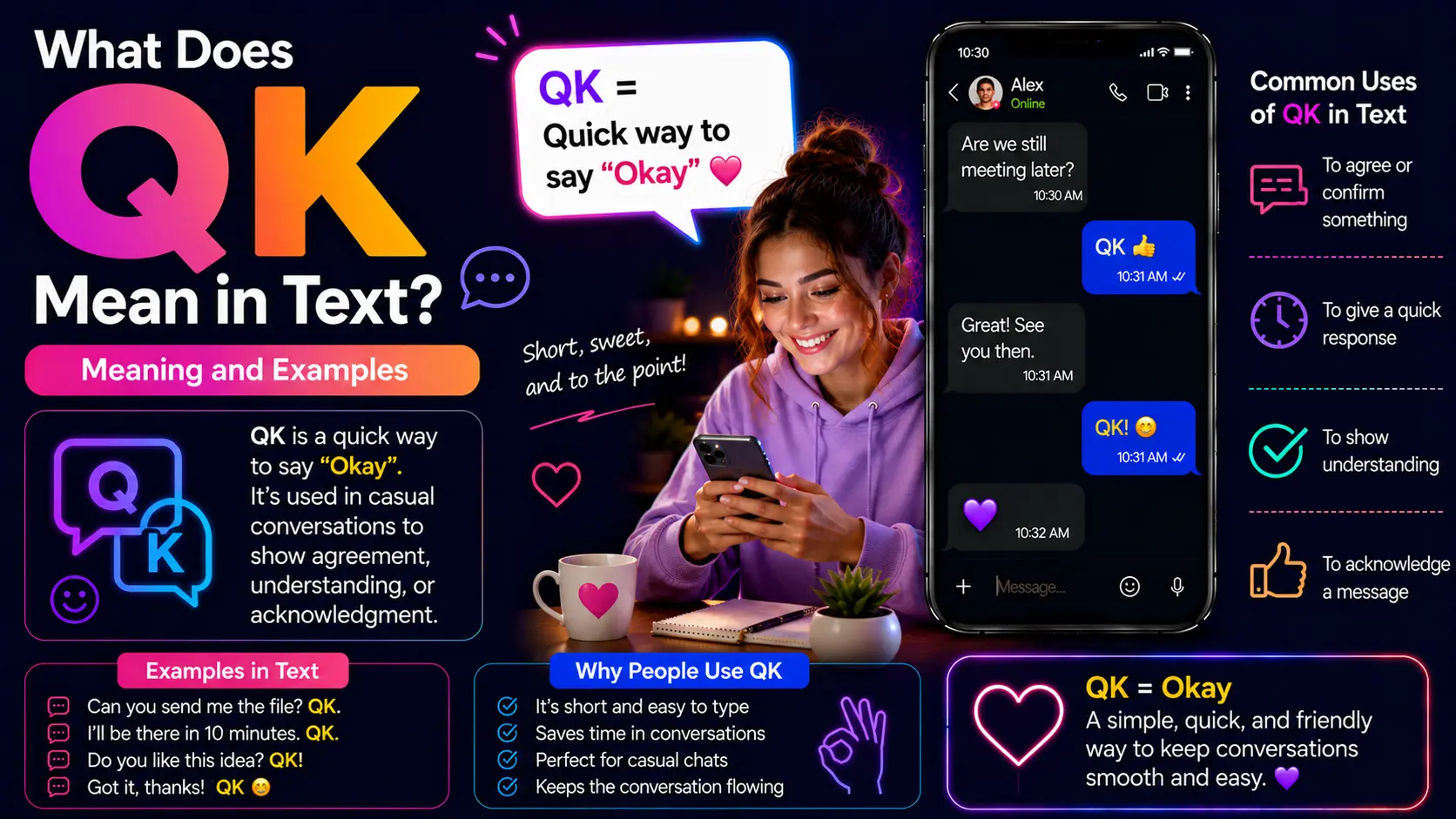
So, what does qk mean in text? In most online conversations, “qk” is commonly used as a shortened version of “okay” or “ok.” It is a quick, casual way to show agreement, acceptance, or acknowledgment.
People use “qk” because modern communication values speed. On platforms like WhatsApp, Instagram, TikTok, and regular text messages, users often shorten words to save time and keep conversations flowing.
However, the meaning of “qk” can depend on the situation, the relationship between people, and the tone of the conversation. A close friend using “qk” may sound relaxed, while a professional message with the same abbreviation might feel too informal.
Understanding these small language changes helps you communicate more naturally and avoid unnecessary misunderstandings.
What Does QK Mean in Text? Quick Meaning
The most common meaning of “qk” in text is:
QK = Okay / OK / Alright
It is usually a casual texting abbreviation that shows agreement or confirmation.
Common meanings include:
• Agreement: “Yes, I understand.”
• Acceptance: “That works for me.”
• Acknowledgment: “I saw your message.”
Examples:
“Qk, I will call you later.”
“Are you coming today? Qk.”
“Qk, sounds good!”
In many cases, “qk” carries the same meaning as saying “okay” in everyday conversation.
Origin and Background of QK
The exact origin of “qk” is not strongly connected to one specific event. Like many texting shortcuts, it developed naturally through digital communication where people wanted faster ways to reply.
Early internet chats, SMS messaging, and online communities encouraged people to shorten common words. Similar examples include “u” for “you,” “pls” for “please,” and “thx” for “thanks.”
The rise of smartphones made these shortcuts even more common. People began typing quickly while multitasking, chatting with friends, or responding during busy moments.
Social media culture also influenced how people use “qk.” Platforms focused on short conversations made brief replies feel normal. A simple “qk” can communicate agreement without needing a full sentence.
Over time, texting language became more emotional and flexible. A short reply is not only about meaning, but also about mood, relationship, and personality.
Real-Life Conversations Using QK
WhatsApp Conversation
Person A:
“Hey, I finished the assignment. Can you check it?”
Person B:
“Qk, send it over. I’ll look at it tonight.”
Here, “qk” means acknowledgment and agreement.
Instagram DM Conversation
Person A:
“Your travel photos look amazing!”
Person B:
“Qk thank you 😊 I had a great time there.”
In this situation, “qk” may be used casually before continuing the conversation.
TikTok Comments Conversation
Person A:
“Part 2 please, this story is interesting.”
Person B:
“Qk, I’ll upload it tomorrow.”
The person is confirming the request.
Text Message Conversation
Person A:
“Can we meet at 6 instead?”
Person B:
“Qk, 6 works.”
The meaning is simple acceptance.
Emotional and Psychological Meaning of QK
Although “qk” looks like a small abbreviation, it can carry different emotions depending on the conversation.
When someone writes “qk” warmly, it may show comfort and familiarity. It can feel like a relaxed response between people who already understand each other.
In some situations, “qk” may feel emotionally neutral. It simply confirms that the person received the message.
However, tone matters. A person replying only “qk” after a serious message may seem distant or uninterested, even if they only intended to say “okay.”
Modern digital communication often removes facial expressions and voice tone, so people interpret small words based on context.
For example, I once saw a simple “okay” message create confusion between friends because one person thought it sounded cold. The issue was not the word itself, but the emotional meaning attached to it.
This shows how small texting choices can influence relationships.
Usage in Different Contexts
Social Media
On social platforms, “qk” is mostly casual. People may use it in comments, direct messages, or quick replies.
Example:
“Qk, I will check your post.”
It keeps conversations short and friendly.
Friends and Relationships
Among friends, “qk” feels natural because people often use relaxed language with people they trust.
It can mean:
“I understand.”
“Sure.”
“No problem.”
Work and Professional Settings
In professional communication, using “qk” is usually not recommended.
A workplace message may require clearer language:
Instead of:
“Qk, I’ll do it.”
Better:
“Okay, I’ll complete it today.”
Professional settings often value clarity over speed.
Casual vs Serious Tone
Casual conversations accept short forms more easily. Serious conversations usually need complete words to avoid emotional confusion.
When Not to Use QK
Although “qk” is harmless in casual texting, there are situations where avoiding it is better.
Do not use “qk” in:
• Formal emails
• Job applications
• Important business communication
• Messages involving serious emotions
• Conversations with people unfamiliar with texting slang
Cultural differences also matter. Some people may not understand the abbreviation and may think it is a typing mistake.
If the conversation requires respect, clarity, or professionalism, writing “okay” is safer.
Common Misunderstandings About QK
One common misunderstanding is thinking “qk” has a negative meaning. Usually, it does not.
Another confusion happens because people interpret short replies emotionally.
For example:
Person A:
“I am sorry I forgot your birthday.”
Person B:
“Qk.”
Person A might think the person is angry. But Person B may only mean “It is okay.”
The difference comes from tone and relationship.
Text messages do not show facial expressions, so people often fill in missing emotions themselves.
Comparison Table
| Expression | Meaning | Tone |
|---|---|---|
| QK | Okay, accepted | Very casual |
| OK | Agreement or confirmation | Neutral |
| Alright | Acceptance | Friendly |
| Sure | Willing agreement | Positive |
| Got it | Understanding | Clear |
| No | Opposite of agreement | Negative refusal |
| Not okay | Disagreement or concern | Serious |
Key Insight:
“QK” is mainly a quick digital way to say “okay,” but the feeling behind it depends on the person, situation, and relationship.
Variations and Types of QK Usage
1. QK as Agreement
Meaning: Accepting an idea or plan.
Example:
“QK, we will meet tomorrow.”
2. QK as Acknowledgment
Meaning: Showing you received information.
Example:
“QK, I saw your message.”
3. QK as a Quick Reply
Meaning: Saving time in fast conversations.
Example:
“QK, thanks.”
4. Friendly QK
Meaning: Casual acceptance between friends.
Example:
“QK 😊 see you soon.”
5. Neutral QK
Meaning: Simple confirmation without emotion.
Example:
“QK, noted.”
6. Short QK
Meaning: A very brief response.
Example:
“QK.”
7. Playful QK
Meaning: Used jokingly or casually.
Example:
“QK boss 😂”
8. Social Media QK
Meaning: Quick online interaction.
Example:
“QK, I’ll follow.”
9. Relationship QK
Meaning: Comfort between familiar people.
Example:
“QK love, talk later.”
10. Digital Habit QK
Meaning: A typing shortcut people use automatically.
Example:
“QK, done.”
How to Respond When Someone Uses QK
Casual Replies
“Sounds good!”
“Okay 😊”
“Perfect.”
“Great, thanks!”
Funny Replies
“QK captain 😂”
“QK approved!”
“QK, message received boss 😄”
Mature Replies
“Thanks for confirming.”
“Understood, I appreciate it.”
“Alright, that works.”
Respectful Replies
“Okay, thank you for letting me know.”
“Sure, I understand.”
“Noted, thanks.”
Regional and Cultural Usage
Western Culture
In many Western online conversations, short forms like “qk” fit into a larger culture of quick digital replies. People often use abbreviations casually with friends.
Asian Culture
In many Asian online communities, texting shortcuts are also common because messaging apps are heavily used for daily communication.
The meaning usually depends on familiarity and context.
Middle Eastern Culture
In Middle Eastern digital conversations, English abbreviations are often mixed with local languages. Younger users may adopt global texting styles while older users may prefer complete words.
Global Internet Usage
The internet has created a shared language where abbreviations cross borders. A person from one country may easily understand “qk” because digital communication connects people worldwide.
Generational Differences
Gen Z users often use short forms naturally because fast online communication is part of everyday life.
Millennials may understand these terms but may use them less frequently depending on their communication style.
Older generations may prefer traditional wording because abbreviations can feel unclear.
Is QK Safe for Kids?
Yes, “qk” is generally a harmless texting abbreviation. It does not usually contain hidden or inappropriate meaning.
However, children should learn that context matters. Understanding respectful communication is more important than simply knowing abbreviations.
Parents and teachers can help children recognize when casual language is appropriate and when formal language is needed.
Frequently Asked Questions
What does qk mean in text messages?
QK usually means “okay” or “ok.” It is a casual way to show agreement or acknowledgment.
Is qk the same as okay?
Yes, in most conversations, qk carries the same meaning as okay.
Is qk rude?
No, qk is not normally rude. However, a very short reply may feel cold depending on the situation.
Can I use qk at work?
It is better to avoid qk in professional communication. Use “okay” or a complete sentence instead.
Why do people write qk instead of okay?
People use qk because it is faster and fits modern texting habits.
Does qk have different meanings online?
The meaning can change slightly depending on the platform and conversation, but “okay” is the most common meaning.
Is qk popular with younger people?
Some younger internet users use short forms like qk, while others prefer different slang or emojis.
Conclusion
Understanding what does qk mean in text helps you communicate better in today’s fast digital world. This small abbreviation usually means “okay,” but its real meaning depends on tone, relationship, and situation.
A simple “qk” between friends can feel natural and easy. In a serious conversation, the same word may need more explanation.
Digital language keeps changing, but the key to good communication remains the same: understand the person behind the message.
Use “qk” confidently in casual conversations, but choose your words carefully when clarity and respect matter most.